
About Trust Again
A ministry created to help people explore questions of trust, authority, freedom, and faith with honesty.
Trust Again is currently being developed in partnership with churches exploring pilot implementations of the Trust Again Course.
Our Mission
Help people explore whether trust can be rebuilt—and whether the authority revealed in Jesus might be worthy of that trust.
What We Believe
Trust Again is a Christian outreach ministry rooted in the historic Christian faith. Our purpose is not to promote a particular denomination or tradition, but to help people honestly explore the central claims of Christianity and consider whether Jesus is worthy of their trust.
We believe in one God—Father, Son, and Holy Spirit—and that God has made Himself known through creation, Scripture, and ultimately through Jesus Christ.
We believe the Bible is inspired by God and is the authoritative foundation for Christian faith and life.
We believe Jesus Christ is the Son of God, fully God and fully human. He lived, taught, served, was crucified for our sins, died, and bodily rose from the dead. Through His death and resurrection, God offers forgiveness, reconciliation, and new life.
We believe salvation is God's gift of grace, received through faith in Jesus Christ—not something we earn through our own goodness or effort.
We believe Jesus calls people not merely to agree with ideas about Him, but to trust Him, follow Him, and receive Him as Lord.
We believe the Holy Spirit is at work drawing people toward truth and transforming those who place their faith in Christ. Because faith cannot be manufactured or coerced, we seek to create space for honest questions, thoughtful reflection, and genuine response while trusting God with each person's journey.
We affirm the foundational beliefs of historic Christianity expressed in the Apostles' Creed and Nicene Creed and seek to remain centered on the essential message of the gospel rather than denominational differences.
How the Framework Emerged
Trust Again grew out of years of conversations with people wrestling with questions about faith. Over time a pattern began to appear. Many struggles with Christianity were not primarily intellectual. They were relational and experiential.
Before conversations even reached questions of evidence or belief—areas where traditional apologetics often focuses—many people were already conflicted about authority and freedom.
Again and again, it became clear that what often looks like skepticism may actually be something else: protection. When trust repeatedly proves unsafe, autonomy can slowly shift from being a way of living freely into a way of protecting oneself.
That insight became the foundation of the Defensive Autonomy framework, which seeks to name an experience many people feel but struggle to describe.


Founder
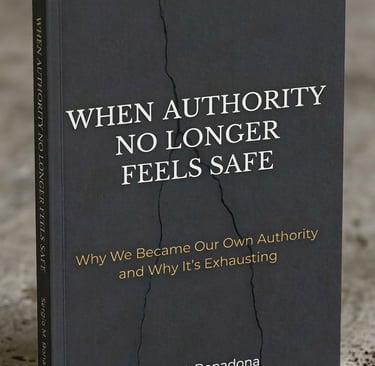
Trust Again was founded by Sergio Bonadona, author of When Authority No Longer Feels Safe.
Sergio has long been interested in apologetics and in helping people thoughtfully consider the claims of the Christian faith. Through years of conversations with skeptics, seekers, and Christians wrestling with doubt, he began noticing that many barriers to faith were connected less to intellectual objections and more to the difficulty of trust.
Those observations eventually led to the development of the Defensive Autonomy framework and to the creation of Trust Again as a ministry dedicated to exploring those questions with honesty and care.


The Book Behind the Framework
The ideas behind Trust Again were first explored in Sergio Bonadona’s book When Authority No Longer Feels Safe.
The book introduces the Defensive Autonomy framework and examines the cultural conditions that make trust difficult today. The Trust Again Course expands on these ideas in a conversational setting designed for churches and small groups.

Our Posture
Because the questions explored in Trust Again often involve personal experiences with authority, the posture of the ministry matters. Trust Again is committed to approaching these conversations with honesty and care. That includes acknowledging the ways authority can fail and speaking about those realities without defensiveness.
Many participants will likely bring difficult stories with them. Those experiences deserve to be heard and taken seriously. For that reason, Trust Again seeks to create environments where real questions can be explored openly and thoughtfully. At its heart, the ministry is guided by a commitment to truth, freedom, and human dignity—and by the conviction that trust can never be forced.
Trust Again
Helping people explore why trust has become so difficult—and whether trustworthy authority might still be possible.